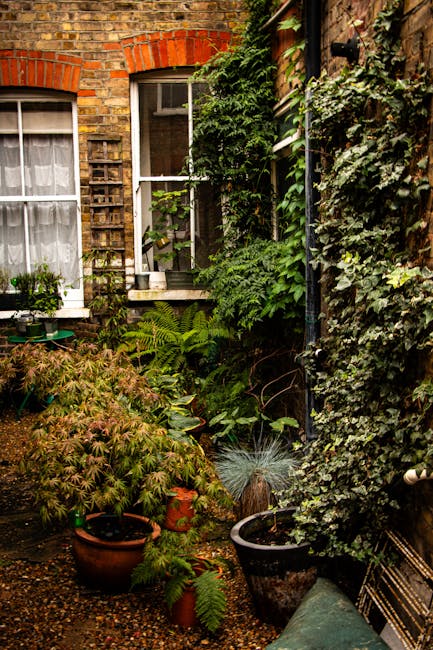
Small garden access gardeners for narrow Enfield terraces

Narrow terraces can be brilliant to live in, but getting a garden properly maintained through a tight side return, a shared passage, or a kitchen door with barely enough swing space? That is a different story. If you are looking for small garden access gardeners for narrow Enfield terraces, you probably need more than a quick tidy-up. You need a team that can work carefully, move equipment sensibly, and deal with awkward access without turning your hallway into a battlefield of muddy boots and hedge cuttings.
This guide explains what that kind of service actually involves, why it matters in Enfield, how the work is usually planned, and what to look for before you book. It also covers practical steps, common mistakes, and the sort of expectations that save a lot of stress later on. Truth be told, small gardens can be some of the most demanding jobs to get right.
- Why this matters
- How the service works
- Key benefits
- Who it is for
- Step-by-step guidance
- Expert tips
- Common mistakes
- Tools and recommendations
- Law, compliance and best practice
- Options and comparison
- Real-world example
- Checklist
- Conclusion
- Frequently asked questions
Why Small garden access gardeners for narrow Enfield terraces Matters
Access shapes everything in a terrace garden. If the only route to the back garden runs through the house, if the gate is narrow, or if there is a step, a steep passage, or a cramped bin area to negotiate, ordinary garden maintenance becomes slower and more delicate. You are not just paying for cutting hedges or mowing a lawn. You are paying for planning, caution, and the ability to work efficiently in awkward conditions.
In Enfield, terrace gardens often come with a mix of older layouts, compact footprints, and shared boundaries. That means a standard garden team may still do a decent job, but not always a tidy one. A team experienced in narrow access knows how to protect floors, avoid damage to walls and fencing, and move tools without making every visit feel like a removal job.
It also matters because small gardens are easy to neglect. A bit of overgrowth, a patchy lawn, and a few bags of cuttings suddenly make the space feel even smaller. And once access gets harder, people delay the work. Then it gets worse. That cycle is common enough, and honestly, a bit miserable.
If your garden needs more than a one-off tidy, it can help to compare the service with broader options such as garden maintenance or, where the space has become cluttered and difficult to use, garden clearance. The right choice depends on whether you need ongoing care or a reset.
How Small garden access gardeners for narrow Enfield terraces Works
The process usually starts with access, not plants. That sounds obvious, but it is where many jobs succeed or stumble. A good gardener will want to know how the team gets in, where tools can be staged, whether there is room for a mower or waste sacks, and what has to be carried through the house. If there is a shared alley, side return, or rear gate, they will likely ask for a quick description or photos before arrival.
Once on site, the work is usually organised around movement. Tools are selected for compact use. Bigger machines may be swapped for smaller, lighter alternatives. Waste is contained as it is generated, because dragging loose cuttings through a narrow passage is never ideal. You may see the team making several careful trips rather than one heavy run. That can look slower from the outside, but it is often the safest and cleanest way to work.
For example, a narrow terrace with a small rear lawn might be tackled in sections: first edges and borders, then lawn cutting, then debris collection, then a final sweep of the route back out. If there is a tree in a tight corner or branches hanging across the path, the team may recommend specialist help through tree lopping and removal rather than trying to force the issue with the wrong equipment.
For more involved improvements, such as reshaping the garden layout so it is easier to maintain in future, landscape gardening or broader landscaping can make a real difference. Sometimes the smartest fix is not just maintenance. It is reducing the access headache for next time.
Key Benefits and Practical Advantages
There is a very practical reason people look for specialist access gardeners: less stress. But that is only the start.
- Cleaner work on awkward routes. A careful team knows how to avoid scuffed paint, crushed plants, and muddy footprints across the kitchen floor.
- Better use of small space. In a compact terrace, even a little pruning or mowing can make the whole garden feel larger and lighter.
- Safer handling of tools and waste. Narrow access often increases trip hazards and manual handling risks. Good planning reduces both.
- Less disruption to the household. If you are at home while the work happens, you want the garden sorted without the place feeling like a building site.
- More realistic maintenance. Once access is understood, future visits can be quicker and more predictable.
There is also a subtle benefit people often miss: confidence. When you know a team understands terrace access, you stop worrying about whether your shed door is too small or whether the gardener will complain about the tight side passage. That reassurance counts for a lot, especially if the garden has been nagging at you for months.
And let's be fair, a small garden can become surprisingly lovely with the right care. A few square metres, well kept, can feel calmer than a much larger space that is constantly half-finished.
Who This Is For and When It Makes Sense
This service makes sense for homeowners, landlords, and tenants who have limited access and limited patience for hassle. It is especially useful if your terrace garden can only be reached through the house, if the entry point is too narrow for larger tools, or if the garden layout includes tricky corners that standard crews might rush through.
It also suits people who want recurring care rather than one-off heroics. If you have a small front or rear garden, a compact patio, or a strip of planting that always seems to get out of hand, regular attention is often easier than waiting until everything becomes overgrown. That is where lawn mowing and routine hedge trimming can keep the job manageable.
Typical situations include:
- Terraced houses with narrow rear access
- Gardens reached through the living room or kitchen
- Small spaces with delicate paving or steps
- Overgrown gardens that need careful, phased clearance
- Properties where waste removal has to be done neatly and quietly
If the garden is mostly tidy but just needs a seasonal refresh, ongoing garden maintenance may be enough. If the space has become difficult to use or unsafe to cross, clearance and a more structured plan are usually better.
Step-by-Step Guidance
If you are arranging work for a narrow-access terrace, a simple process helps. No need to overcomplicate it.
- Describe the access clearly. Mention gates, side passages, house entry points, steps, and anything awkward about the route.
- Share a few photos. A couple of pictures of the garden, the access route, and any overgrown areas can save everyone time.
- Say what outcome you want. Is this a tidy-up, a regular maintenance visit, or a more substantial reshape?
- Ask how waste will be removed. On narrow terraces, rubbish handling is often half the job.
- Check equipment suitability. A compact mower, hand tools, and smaller loads may be better than large machines.
- Confirm any safety concerns. Mention broken paving, loose rails, pets, shared access, or areas that are not stable underfoot.
- Agree the scope before work starts. This avoids the awkward "while you're here, could you also..." spiral. We have all done it.
A helpful way to think about it: the more limited the access, the more important the brief. When everything is straightforward, teams can improvise. In a narrow Enfield terrace, improvisation is not the goal. Smooth is the goal.
If you want to see the range of services that can sit around this kind of job, the broader services overview is a useful place to start. It helps you match the task to the right type of support.
Expert Tips for Better Results
Here are a few practical tips that tend to make a noticeable difference. Not glamorous, but useful. Very useful.
- Keep the access route clear before the team arrives. Move bins, bikes, plant pots, and anything else that turns a narrow path into an obstacle course.
- Tell the gardener where the fragile bits are. A cracked slab, a wobbly fence panel, or a prized shrub tucked in a corner should not be a surprise.
- Choose regular visits if growth is fast. In small gardens, a light touch every so often is usually easier than a dramatic rescue later.
- Use narrow-friendly planting. If you are redesigning, pick plants and features that do not need constant heavy access to maintain.
- Think about waste before the job starts. If the garden is likely to produce a lot of green waste, it is better to plan for it than to improvise halfway through.
One small but important tip: if the only way in is through the house, protect floors and edges before the work starts. Good teams will handle this carefully, but a little advance thought can save you from noticing a dark muddy trail at the end of the day. Nobody wants that surprise on a Thursday afternoon.
Another thing? If your terrace garden has not been touched for a while, ask for a phased approach. It often works better than trying to do everything in one go. Less pressure, fewer mistakes, cleaner finish.
Common Mistakes to Avoid
Small access jobs are easy to underestimate. That is the main trap.
- Assuming all gardeners are equally suited to narrow access. Some are excellent in open gardens but less prepared for tight indoor-outdoor movement.
- Leaving access details out of the enquiry. This can lead to the wrong tools, the wrong time allowance, or a rushed visit.
- Expecting a large clearance job from a maintenance appointment. Maintenance and clearance are different jobs, and mixing them can create frustration.
- Ignoring waste volume. Even a small garden can create a surprising amount of cuttings when it has been left for a while.
- Not considering future access. If a job is being planned from scratch, think about how the garden will be maintained later, not just how it looks after one visit.
There is also a softer mistake: not saying what matters most to you. Some people care most about speed. Others want a spotless finish. Others just do not want noise before a certain time. Say it early. It saves everyone a bit of awkwardness.
Tools, Resources and Recommendations
For narrow terrace work, the best tools are often the simplest ones. Think compact, easy to carry, and easy to clean. The right kit depends on the garden, but these are the kinds of tools that often help:
- Small hand pruners and secateurs for tight borders
- Lightweight hedge tools for careful shaping
- Compact mowers or hand tools for small lawns
- Tarps or bags for neat collection of cuttings
- Protective coverings for indoor routes when access runs through the house
- Simple storage or staging space so tools are not left in the way
From a homeowner's perspective, the most helpful "resource" is often a clear garden brief. That does not need to be formal. A note with a few bullet points, a couple of photos, and a rough idea of what you want is usually enough. If you are comparing service options, pricing and quotes can help you understand what is included and whether access has been factored in properly.
If the garden is part of a broader improvement plan, you might also look at decking services where a hardwearing surface could make the space easier to enjoy and maintain. Not for every terrace, of course. But in some compact gardens, a well-placed deck can reduce muddy patches and make access simpler. A small change, big difference.
Law, Compliance, Standards, or Best Practice
For most domestic garden jobs, the main compliance concerns are practical rather than legal drama. In plain English: safe access, sensible manual handling, correct waste management, and clear communication. If the work involves ladders, power tools, pruning height, or moving heavy waste through a house, the team should treat it as a safety-sensitive job, even if the garden itself is tiny.
In UK settings, good practice usually means checking for trip hazards, handling sharp tools properly, avoiding unnecessary strain, and taking care around shared access points. If a property has shared alleyways, neighbouring boundaries, or close-set fences, the work should be planned to avoid damage or disputes. That is basic professionalism, but it matters.
Insurance is also worth asking about. Not because every job is risky, but because narrow access leaves less room for error. If you want reassurance around this, the company's own insurance and safety information should explain how work is approached. It is also sensible to understand the business side of things, including terms and conditions and how payment is handled through payment and security.
If sustainability matters to you, ask how cuttings and waste are dealt with. Many gardeners can work in a way that reduces avoidable waste and supports recycling where practical. The page on recycling and sustainability gives a good sense of that approach. It is a small detail, but it says a lot about how carefully a job is run.
One more thing: accessibility is not only about mobility needs. It is also about whether a property layout is practical for the work itself. If you want a business that thinks about inclusivity and user access carefully, the accessibility statement can be a useful signal of how seriously they take that side of the service.
Options, Methods, or Comparison Table
Different access challenges call for different approaches. Here is a straightforward comparison that may help you decide what kind of support is right for your terrace.
| Method | Best for | Strengths | Limitations |
|---|---|---|---|
| Routine maintenance visit | Small gardens that stay manageable with regular attention | Fast, tidy, predictable | Not suitable for heavy overgrowth |
| One-off clearance | Gardens that have become cluttered, blocked, or overgrown | Creates a clean starting point | May take longer and produce more waste |
| Landscape-led redesign | Terraces that need easier future access and simpler upkeep | Can improve long-term practicality | More planning required |
| Targeted pruning or trimming | Hedges, climbers, or shrubs blocking access or light | Immediate visual improvement | May need follow-up maintenance |
For many narrow Enfield terraces, the answer is a mix. A little maintenance, some pruning, maybe a bit of clearance. Not everything needs a full redesign. Sometimes the smartest move is just to get the space back under control and keep it there.
Case Study or Real-World Example
Imagine a classic terraced property in Enfield with a small rear garden, a narrow passage through the house, and a lawn that has gone soft at the edges after a wet spell. The owner wants the space usable again but worries about dirt, damage, and whether a garden team can get equipment in without fuss.
A sensible approach would start with a short assessment of access. The gardener would note the narrow route, protect the main walking area, and choose lighter tools rather than forcing bulky kit through a tight space. The lawn would be cut in stages, the borders trimmed back, and the waste bagged as work progressed. If there were an overhanging branch making the route awkward, it might be addressed separately through tree care rather than treated as an afterthought.
The end result would not be dramatic in a flashy sense. But it would feel better every time the back door opened. More light. Less clutter. The sort of garden you can actually step into with a cup of tea instead of glancing at and thinking, "I really must sort that out."
That last part matters. Small gardens do not need to be grand. They just need to work.
Practical Checklist
Use this before booking small-access garden work for a narrow terrace.
- Describe every access route clearly
- Measure narrow gates, passages, or doors if you can
- Share photos of the garden and any awkward points
- Explain whether you need maintenance, clearance, or both
- Point out fragile paving, steps, loose edges, or shared areas
- Ask how waste will be removed from the property
- Check whether the team can use suitable compact tools
- Confirm timing if noise or household access is an issue
- Ask about insurance, safety, and working practices
- Decide whether you want one-off help or regular visits
Expert summary: The best results in narrow terrace gardens come from clear access planning, realistic expectations, and a team that treats small spaces with the same care they would give a much larger one.
If you are comparing providers, it is worth starting with an experienced local team and asking a few very practical questions. You do not need a long pitch. You need clear answers and a proper plan. If that is what you are after, the most useful next step is to explore the service options and request a tailored quote through contact us. For background on the team and how they work, about us is worth a look too.
Conclusion
Small garden access gardeners for narrow Enfield terraces are not just about getting through a tight gate. They are about protecting your home, using the right tools, handling waste properly, and making a compact outdoor space genuinely easier to live with. If your terrace garden feels awkward, cramped, or overdue for attention, the right approach can change it from a hassle into a place you actually enjoy again.
Keep the brief clear, choose the right type of service, and do not be afraid to ask about access, safety, and maintenance planning. The best garden work in tight spaces is calm, careful, and neatly executed. Nothing flashy. Just properly done.
Get a free quote today and see how much you can save.
And if the first job is simply making the space feel manageable again, that is a perfectly good place to start. Sometimes the smallest gardens bring the biggest relief.
Frequently Asked Questions
What do small garden access gardeners for narrow Enfield terraces actually do?
They handle garden work in places where access is limited, such as narrow terrace gardens, shared side passages, or homes where tools and waste have to pass through the house. The job is as much about careful movement and planning as it is about pruning or mowing.
Is this service only for overgrown gardens?
No. It is useful for regular maintenance too. In fact, narrow-access terraces often benefit most from frequent lighter visits, because waiting too long can make the job more difficult and more expensive to sort out.
How should I prepare my terrace garden before the gardeners arrive?
Clear the access route as much as you can. Move bins, chairs, bikes, pots, and anything fragile out of the way. If there is a door code, shared gate, or awkward access point, explain it in advance so the team is not guessing on arrival.
Can gardeners work through my house without making a mess?
A careful team should take steps to minimise mess, such as protecting floors and carrying waste neatly. Still, narrow access through a home is always something to plan for, especially after wet weather or if the garden is very overgrown.
What if my garden needs clearance as well as regular care?
That is common. A one-off garden clearance may be the right starting point, followed by ongoing garden maintenance so the space stays manageable.
Do narrow access jobs cost more?
They can, because they often take longer and require more careful handling. That said, the cost depends on the garden size, the level of overgrowth, the access route, and the amount of waste involved. A proper quote is always the best guide.
What kind of tools are best for compact terrace gardens?
Smaller hand tools, lightweight cutters, compact mowers, and neat waste bags or tarps are usually the most practical. In tight spaces, agility matters more than size. Big kit is not always better, despite what people like to imagine.
Can a narrow terrace garden be redesigned to make future maintenance easier?
Yes. Smart planting, better layout choices, and features like paving or decking can reduce ongoing maintenance pressure. If the garden is awkward every time you use it, a redesign can be worth considering.
What should I ask before booking a gardener for a narrow-access property?
Ask how they handle access, what equipment they use, how waste will be removed, whether they are insured, and whether they have experience with compact terrace layouts. Clear answers usually tell you a lot about how the job will go.
How often should a small terrace garden be maintained?
That depends on the planting, lawn growth, and how much use the garden gets. Some small gardens need monthly attention in the growing season, while others can be managed with less frequent visits. Regular light maintenance is often easier than major catch-up work.
What if I am not sure whether I need maintenance, clearance, or landscaping?
That is normal. If the garden is just untidy, maintenance may be enough. If it is heavily overgrown or blocked, clearance is usually the better first step. If the space itself needs reworking to improve access and usability, landscaping or landscape gardening may be the smarter route.
Are there any safety concerns with narrow access garden work?
Yes, mainly trip hazards, sharp tools, manual handling, and awkward movement through tight spaces. Good practice includes clear communication, tidy working methods, and proper attention to floors, gates, steps, and boundaries. It should feel controlled, not hurried.